
Mental Health Act - advance statements: guide
Guide to advance statements for the 2003 Mental Health Act .
In March 2003 the Scottish Parliament passed a new law, the Mental Health (Care and Treatment) (Scotland) Act 2003. It will come into effect in October 2005. It sets out how you can be treated if you have a mental illness including dementia, a learning disability or a personality disorder, and what your rights are. This guide is one of a series about the new Act, and it explains how you can tell people how you would like to be treated in the future, if you become too unwell to make decisions for yourself.
The Act says
- when you can be given treatment against your will
- when you can be taken into hospital against your will
- what your rights are, and
- what safeguards there are to make sure your rights are protected.
This Guide is primarily written for people who use mental health services, but it may be of interest to others including carers or someone who might be asked to witness an advance statement.
Disclaimer
While we have done our best to see that the information contained in this guide was accurate and up to date when it was published we cannot guarantee this. If you have any questions about how the information might apply to you, you should discuss your concerns with a solicitor, your independent advocate or other appropriate adviser.
1. Some terms used in this guide
The Act - The Mental Health (Care and Treatment)(Scotland) Act 2003.
Advance statement - This is a written statement, drawn up and signed when the person is well, which sets out how s/he would prefer to be treated (or not treated) if s/he were to become ill in the future. It must be witnessed and dated. The Tribunal and any medical practitioner treating the person must have regard to an advance statement. If the wishes set out in an advance statement have not been followed the medical practitioner must send to the Mental Welfare Commission (and others) a written record giving the reasons.
CPN - Community Psychiatric Nurse.
Independent advocate - Under the Act anyone with a mental disorder has the right to access independent advocacy services. An independent advocate is able to give support and help to enable a person to express their own views about their care and treatment.
Mental disorder - This is a term used in the Act to include people who have a mental illness including dementia, learning disability or personality disorder.
Mental Welfare Commission for Scotland - The Mental Welfare Commission is an independent organisation. Its role is to protect the welfare of people who are vulnerable through mental disorder.
MHO- Mental Health Officer; a social worker who deals specially with people with mental disorder. Mental Health Officers have particular duties under the Act.
Named person - This is someone who will look after the person's interests if he or she has to be treated under the Act.
RMO - Responsible Medical Officer; the medical practitioner, usually a consultant psychiatrist, who is responsible for the person's care and treatment.
Tribunal- The Mental Health Tribunal for Scotland was set up by the Act to make decisions about the care and treatment of people with mental disorder.
2. What is an advance statement?
Doctors and other people who are treating you for a mental disorder have a duty to take into account your wishes about how you would like to be treated. Sometimes this can be difficult if, for instance, you are too unwell to make your own decisions. The new Act means that, if you have a mental disorder, you can write down in an advance statement how you would like to be treated if, in the future, you become too unwell to make decisions yourself.
If you have a mental disorder the Act gives you the right to make a written statement saying how you would like to be treated if you become too unwell in the future to make decisions yourself. It is not the same as a 'living will', which people sometimes use to say how they would like to be treated if they are dying. An advance statement is only about the treatment you would prefer to receive, or not receive, for your mental disorder. It must be made while you are well enough to state your treatment preferences, and will only come into force if, in the future, you become too unwell to make decisions about your treatment for yourself.
To be valid an advance statement must be in writing, signed, and witnessed according to the following criteria:
- At the time of making (or withdrawing) an advance statement, the person must have the capacity of properly intending the wishes specified in it;
- the advance statement must be in writing;
- it must be subscribed (signed) by the person making it;
- the person's subscription of it is witnessed by a person (the "witness" see note 8 below) who signs the statement as a witness to that subscription; and
- the witness certifies in writing on the document that, in their opinion, the person making the statement has the capacity referred to in paragraph (i) above.
- An advance statement may be withdrawn by the person who made it if-
-
- at the time of making it the person has the capacity properly to intend to withdraw the statement; and
- it is made by means of a document written document which is signed and witnessed in the same way as the original statement (see the suggested style at the back of this guide).
3. What difference will an advance statement make?
If you have made a valid advance statement then it must be taken into account when decisions are taken about your care and treatment by those who are responsible for your care.
This will include
- a Mental Health Tribunal
- anyone giving you care under the Act
- a second opinion doctor being consulted about authorisation of some treatments under the Act.
In an advance statement you can say which treatments work well for you, and which ones you would not want. You can give your views about medications, therapies or electro convulsive therapy ( ECT) . It might be helpful if you can include any reasons for your views. For example you could say
'I prefer individual therapy to group therapy because I am uncomfortable with strangers when I am unwell'
or
'I don't want medications which make me put on lots of weight'.
Doctors would then see whether there were other treatments which would help you. But an advance statement cannot make a medical practitioner do anything that is illegal or unethical, and it cannot insist on particular services, medicines or treatments. Your advance statement will be taken into account with all the other aspects of your care. It might be, for instance, that the medication you prefer would not be right for you any more.
If a decision is made which goes against your advance statement you will be given the reasons in writing. A copy will also be given to your named person, your welfare attorney and your guardian if you have any of these, and to the Mental Welfare Commission. A 'named person' is someone you can appoint to look after your interests if you have to be treated against your will. There is more information about this in a separate guide called "A Guide to Named Persons". The Mental Welfare Commission is an independent body set up to protect the interests of people who are vulnerable because of a mental disorder. The Commission's address is listed on the Contacts page.
4. When can I make an advance statement?
You can make an advance statement under the Act from October 2004. From October 2005 anyone who is giving care and treatment under the new Act must take into account a properly signed and witnessed advance statement if the person receiving treatment cannot make their own decisions about their care.
Any written statement about your wishes about your treatment can be taken into account, even if it was written before October 2004, but it will not have the same standing in law as an advance statement. If you already have a written note of your wishes you can make this into an advance statement by making sure it meets the criteria listed at note 2 above.
5. Who can make an advance statement?
If you can understand what you are putting in the statement and the effect it might have on your future treatment, you can make an advance statement.
This includes young people under 16 years of age so long as you can understand the nature and possible consequences of the procedure or treatment.
You can make a statement if you are receiving treatment for a mental disorder (mental illness including dementia, learning disability or personality disorder) now, have had treatment in the past, or have never had treatment.
6. What can I put in an advance statement?
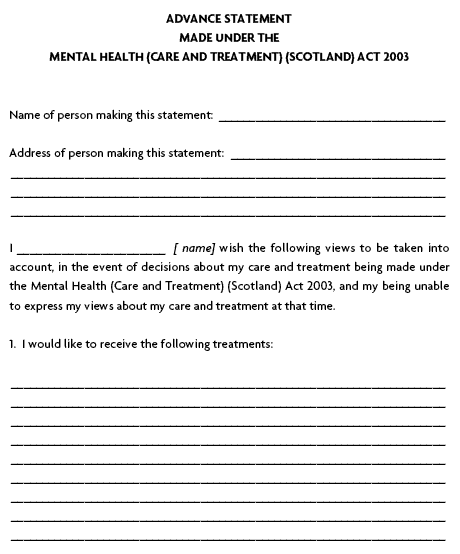
An advance statement should set out the ways you would like to be treated for mental disorder, including any ways you would not like to be treated. It can include your wishes about medications, therapies and particular treatments, like ECT. It does not need to be typed, but it must be written clearly enough to be read by those who will be caring for you. A suggested style is included at the end of this guide but, as long as your statement meets the criteria listed at note 2 above it will be valid. It should also include
- your full name and address
- the name and full address of the witness, and how they qualify as a witness
- the date it was witnessed.
It will be helpful if you also attach to your advance statement a list containing, if you have them, the name and address of
- your named person
- your carer
- your general practitioner
- your guardian or welfare attorney.
7. Who can help me write an advance statement?
Anyone who knows you well can help you write an advance statement. This might be, for instance,
- your doctor, nurse or mental health officer
- your family
- your independent advocate
- your key worker or support worker
- or other people close to you.
If there is a regular meeting to review your care and treatment with any of these people, you could discuss your advance statement then.
8. Who can witness my advance statement?
The person who witnesses your advance statement is confirming that in their opinion you are able to understand what you have written in the statement and the effect it might have on your future treatment. The witness must be someone who is either:
- clinical psychologists entered on the British Psychological Society's register of chartered psychologists;
- medical practitioners;
- occupational therapists registered with the Health Professions Council;
- persons working in, or managing , a care service 1;
- registered nurses;
- social workers; and
- solicitors.
1 Only staff working in, or managing, certain care services can act as a witness. This includes services like care homes, but does not include other services, like employment or training services. If there is any doubt about this, then staff should check before acting as a witness.
It is important that you are clear about what you want in your advance statement before asking someone to witness it. The witness must be able to confirm in writing that you are able to understand the importance of the statement you are making about your future care, and might want to talk to you for a while about your experiences and preferences, and to make sure you are clear about when and how your advance statement would be used. The witness does not have to be involved in writing your statement, nor do they have to agree with the wishes you have written in it.
9. What if English is not my first language?
It is important that the information in your advance statement can be clearly understood by the people who are responsible for your care. Your witness will also wish to be sure that you understand the importance of the statement you are making about your future care, and may want to ask you some questions.
If you wish to write your statement in a language other than English you should seek interpretation and translation assistance from your Health Board and/or your local authority. Under the Race Relations (Amendment) Act 2000 they have a statutory duty to provide support for this.
10. What about personal statements?
A personal statement is not part of your advance statement, and does not have the same standing in law. It doesn't need to be signed or witnessed. You can write a personal statement to explain about important things apart from your treatment for your mental disorder. For example you might be concerned about how children or pets might be taken care of if you are unwell, about keeping your employer informed, or other things that are important to you such as any special dietary needs, your spiritual life or how you like to exercise or relax.
Although a personal statement is not part of your advance statement you can attach the two together, so that they can be kept safely.
11. How is an advance statement witnessed?
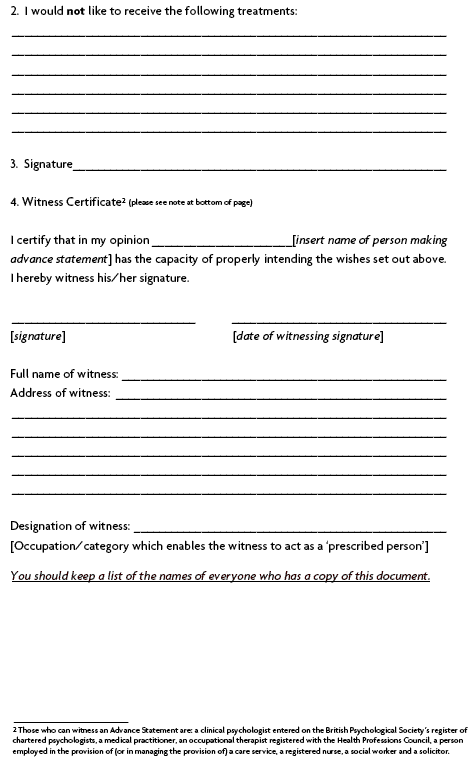
Once the witness is sure that you understand all the aspects of the advance statement he or she will ask you to sign it. Under your signature the witness must write
I hereby certify that I am of the opinion that at the time of making this advance statement[your name]has the capacity of properly intending the wishes specified in it. I hereby witness his/her signature.
The witness will then add his or her own signature, full name and address, and the date.
If the witness is involved in your care and treatment they might want to talk to you about 'conflict of duty'. This means that they may be worried that one day they might have to make a decision which goes against your advance statement, to give you the best possible treatment for your mental disorder. They would discuss this with you and instead of the statement above they might want to write:
I hereby certify that I am of the opinion that at the time of making this advance statement[your name]has the capacity of properly intending the wishes specified in it. I have stated my views with respect to my perceived risk of future conflict of duty. I hereby witness his/her signature.
This will not affect your advance statement, which will still be fully valid. If either of you feels it is not appropriate for him or her to act as a witness because of the risk of a possible conflict of duty you can ask them to help you find someone else to be the witness.
12. Who should know about my advance statement?
Once your advance statement has been witnessed you should give a copy to people who need to know about it. This might include, if you have them, your
- named person
- carer
- family
- solicitor
- nurse
- independent advocate
- guardian
- welfare attorney
- responsible medical officer
- mental health officer
- general practitioner
- other people close to you.
You should keep a list of the names and contact details of everyone who has a copy of your advance statement. If you later withdraw your statement you will need to notify them all.
If you have made a personal statement you can attach it to your advance statement.
If your advance statement is placed in your medical records it will be treated confidentially, in the same way as the rest of your medical records.
13. Can I change my mind about my advance statement?
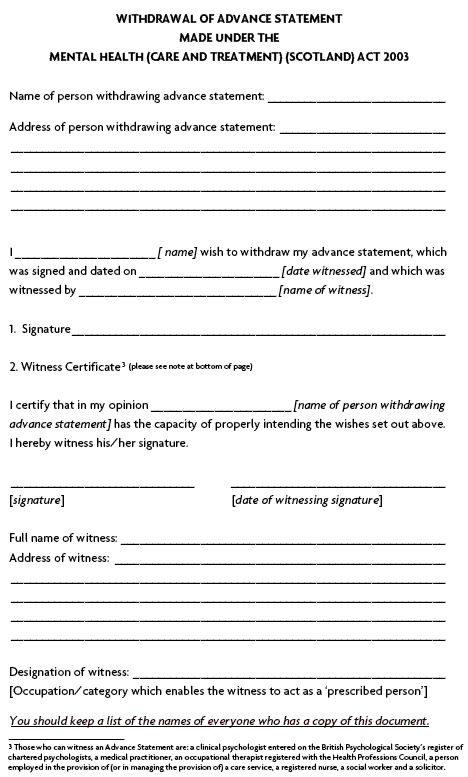
If you change your mind about your advance statement you can withdraw it. To withdraw your advance statement you should write:
'I hereby withdraw the advance statement made by me,[write your name]on[write the date your advance statement was witnessed]'
A witness should then write:
'I hereby certify that I am of the opinion that at the time of withdrawing this advance statement[your name]has the capacity of properly intending their wishes. I hereby witness his/her signature.'
The witness should then add their own signature, full name and the date. A suggested style is included at the end of this guide but, as long as your statement meets the criteria listed at note 2 above it will be valid.
The person who witnesses the withdrawal of your advance statement does not have to be the same person who witnessed your original statement, but he or she must come from one of the same groups of people listed in note 8 above.
If you withdraw your advance statement it is important that you make sure that everyone who has a copy of your statement also receives written notice that you have withdrawn it. It is especially important that people involved in your care, such as your GP, MHO and RMO are given written notice that you have withdrawn your statement.
If you have also written a personal statement this will not be affected when you withdraw your advance statement. However you might want to review or update your personal statement at the same time.
14. Should I review my advance statement?
You do not have to review your advance statement, but it is a good idea to do so about every six months, and at least once a year. This should include checking and updating the list of everyone who has a copy. If your views have changed you might wish to withdraw your old advance statement and make a new one. Both the withdrawal and the new statement will need to be witnessed. You should keep a list of the names and contact details of everyone who has a copy of your advance statement.
If you have made a personal statement you can review it at the same time as you review your advance statement. You will not need a witness for changes to your personal statement.
15. How much will my advance statement cost?
Before you ask someone to help you write your advance statement, or to witness it, you should ask them if it will cost you anything. Some people you ask for help might need to charge you for their working time. If you ask a solicitor you should ask them whether legal aid will pay for some or all of the cost. If you are asked to pay more than you can afford you can ask the person to suggest someone else who can help you.
16. Contacts
Advocacy Safeguards Agency
1-2 St Andrew Square, EDINBURGH, EH2 2BD
Telephone: 0131 524 9380
Website: www.advocacysafeguards.org
Depression Alliance Scotland
3 Grosvenor Gardens, EDINBURGH, EH12 5JU
Telephone: 0131 467 7701
Website: www.depressionalliance.org
Mental Health Tribunal for Scotland
1 st Floor, Bothwell House, Hamilton Business Park, Caird Park, Hamilton, ML3 0QA
Website: www.mhtscot.org
Mental Welfare Commission for Scotland
Floor K, Argyle House, 3 Lady Lawson Street, Edinburgh EH3 9SH
Telephone: 0131 222 6111
FREEPHONE: 0800389 6809
Website: www.mwcscot.org.uk
National Schizophrenia Fellowship (Scotland)
Claremont House' 130 East Claremont Street, EDINBURGH EH7 4LB
Telephone: 0131 557 8969
Website: www.nsfscot.org.uk
Scottish Association for Mental Health ( SAMH)
Cumbrae House, 15 Carlton Court, Glasgow G5 9JP
Telephone : 0141 568 7000
Website: www.samh.org.uk
Scottish Consortium for Learning Disability ( SCLD)
The Adelphi Centre, Room 16, 12 Commercial Road, Glasgow, G5 0PQ
Telephone: 0141 418 5420
Website: www.scld.org.uk
Scottish Independent Advocacy Alliance ( SIAA)
138 Slateford Road, Edinburgh EH14 1LR
Telephone: 0131 445 8183
Website : www.siaa.org.uk
17. Acknowledgements
This guide was produced in collaboration with Scottish Association for Mental Health, National Schizophrenia Fellowship Scotland, the Advocacy Safeguards Agency, the Scottish Independent Advocacy Alliance, the Mental Welfare Commission for Scotland, the State Hospital at Carstairs, and the Scottish Executive.
We wish to thank Yvonne Osman for her assistance with this Guide. We also wish to thank all the mental health service users and carers who contributed their views on earlier drafts, and Chris Evans and Joyce Mouriki for facilitating this feedback..
.
There is a problem
Thanks for your feedback